
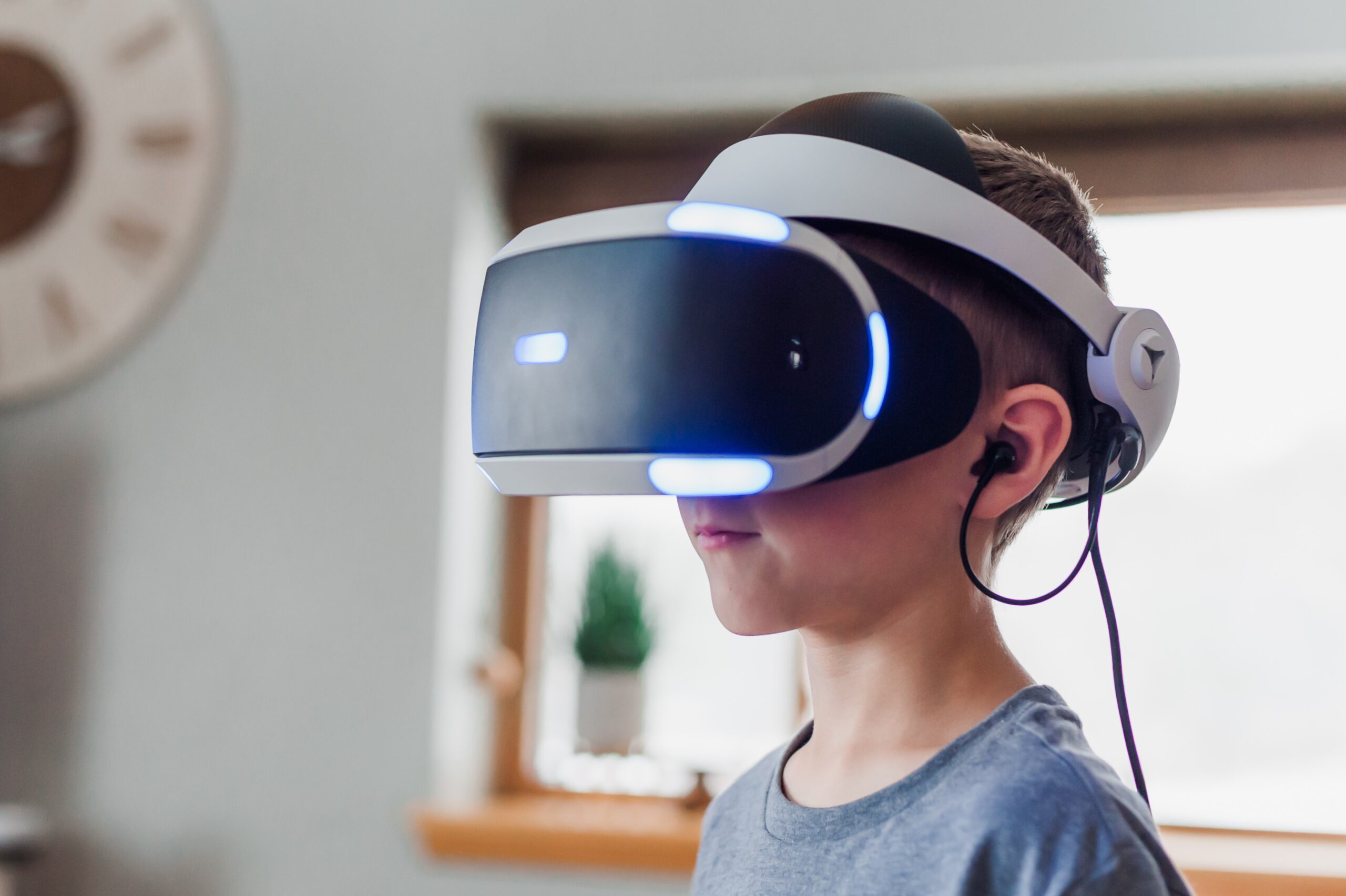
Virtual reality (VR) is a technology that has been around for several decades but has only recently become widely accessible and affordable. It is a computer-generated simulation of a three-dimensional environment that can be interacted with using specialized equipment such as headsets and gloves. The immersive experience provided by VR has made it a popular tool in entertainment, education, and even therapy. In this article, we will explore the history, technology, and applications of virtual reality.
History of Virtual Reality
The concept of virtual reality has been around since the 1960s, when Ivan Sutherland developed the first head-mounted display (HMD) which he called the “Sword of Damocles.” This early prototype was too heavy and expensive to be practical, but it paved the way for further research and development in the field.
In the 1980s, the term “virtual reality” was coined by Jaron Lanier, who founded VPL Research, a company that produced some of the first commercial VR hardware and software. However, it was not until the 1990s that VR started to gain more mainstream attention, with the release of consumer-grade HMDs such as the Virtual Boy by Nintendo and the VFX1 by Forte Technologies.
Since then, VR technology has continued to evolve, with advancements in graphics processing, motion tracking, and haptic feedback making the experience more realistic and immersive than ever before.
How Virtual Reality Works
Virtual reality works by creating a simulated environment using computer-generated graphics and other sensory inputs such as sound and touch. The user wears a headset that tracks their head movements and adjusts the view of the virtual environment accordingly, creating the illusion of being present in that environment.
Some VR systems also use additional equipment such as gloves or controllers to track the user’s hand movements and provide haptic feedback, allowing them to interact with objects in the virtual environment.
The graphics and other sensory inputs are generated in real-time by a powerful computer that is usually connected to the headset and other VR equipment. This requires a high level of processing power and is one of the reasons why VR has only recently become widely accessible and affordable.
Applications of Virtual Reality
Virtual reality has a wide range of applications, from entertainment and gaming to education, training, and therapy.
Entertainment and Gaming
Virtual reality has revolutionized the entertainment and gaming industries, providing users with immersive experiences that were previously impossible. VR games and experiences allow users to explore new worlds, engage in exciting activities, and interact with virtual objects and characters in a way that feels real.
Education and Training
Virtual reality has also become a popular tool in education and training, particularly in fields such as medicine, engineering, and aviation. VR simulations can provide students with a safe and controlled environment to practice skills and procedures, without the risk of causing harm or damage.
For example, medical students can use VR to practice surgeries and other procedures, while pilots can use VR to simulate emergency situations and other scenarios that would be difficult or dangerous to recreate in real life.
Therapy and Rehabilitation
Virtual reality has also shown promise as a tool for therapy and rehabilitation. VR simulations can be used to treat a range of conditions, including anxiety, phobias, and PTSD, by exposing patients to controlled and immersive environments that trigger their symptoms.
For example, VR exposure therapy has been used to treat veterans with PTSD, by exposing them to simulated combat situations in a controlled environment. Similarly, VR simulations can be used to help people overcome phobias or anxiety disorders by gradually exposing them to the things that trigger their fears.
Conclusion
Virtual reality is a rapidly evolving technology that has the potential to revolutionize the way we experience and interact with the world around us. From entertainment and gaming to education, training, and therapy, VR has already shown its value in a wide range of applications.
As the technology continues to evolve, we